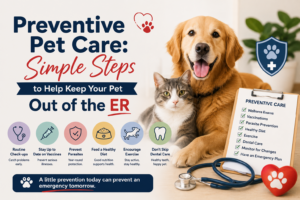
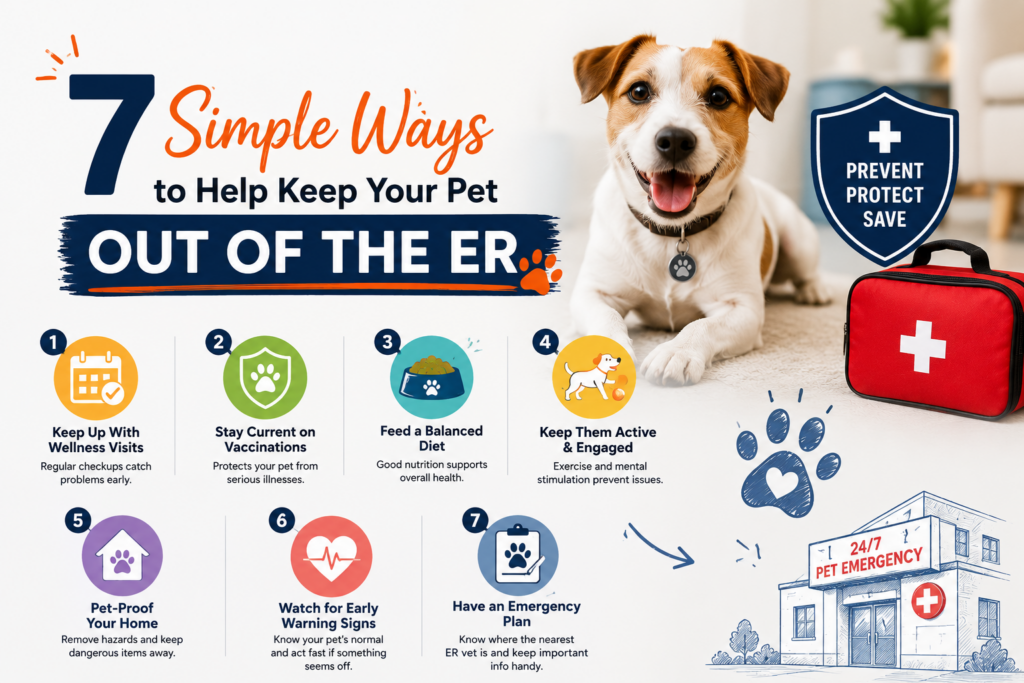
As pet owners, we want our companions to stay healthy, happy, and by our side for as many years as possible. Although some emergencies are unavoidable, there are many everyday steps we can take to reduce unnecessary risks.
The good news? Preventive pet care does not have to be complicated. A few simple habits can make a big difference.
1. Keep Dangerous Items Out of Reach
Pets are curious by nature. Something as ordinary as a trash can, medication bottle, or household plant can become dangerous if your pet decides to investigate.
Use secure trash containers, keep medications safely stored, and avoid plants known to be harmful to pets. These simple precautions can help prevent serious problems.
2. Keep Your Pet Safe Outdoors
Outdoor adventures can be wonderful, but they also come with risks. Keeping dogs on a leash and maintaining secure fencing can help prevent them from running into traffic or becoming lost when frightened by fireworks, storms, loud noises, or other unexpected events.
3. Stay Consistent With Veterinary Care
Regular veterinary examinations can help identify health concerns before they become more serious. Vaccinations and parasite prevention are also important parts of preventive care.
Your veterinarian can help determine which services are appropriate for your pet based on factors such as lifestyle and exposure.
4. Watch Your Pet’s Weight and Diet
A healthy diet and healthy weight are important to your pet’s overall well being. Feeding an appropriate, nutritionally balanced diet and monitoring portions can help support mobility and long term health.
Remember: treats are part of your pet’s calorie intake too. Because food is often associated with love, it can be easy to give more treats than intended.
5. Don’t Forget Dental Care
Your pet’s mouth deserves attention just like the rest of the body. Dental disease can cause significant pain and may contribute to other health problems.
Regular dental care and appropriate home routines can help support your pet’s oral health.
6. Know What Is Normal for Your Pet
One of the easiest things you can do is pay attention to your pet every day.
Notice how much they eat and drink, how they move, their energy level, alertness, and other normal behaviors. When you know what is normal, changes are easier to recognize.
A simple daily wellness checklist can help you stay aware of your companion’s condition.
7. Prepare Before You Need Help
Emergencies are stressful enough without having to search for a veterinary hospital or medication information at the last minute.
Keep your veterinarian’s contact information handy, know where nearby emergency veterinary facilities are located, maintain an appropriate supply of your pet’s medications, and consider having a home first aid kit available.
Being prepared can save valuable time and reduce stress when your pet needs help.
Your Pet Is Counting on You
Our pets depend on us for their safety and well being. Preventive care is one of the best ways we can show them that we care.
You do not need to do everything perfectly. Start with the basics: create a safe home, provide regular veterinary care, maintain a healthy lifestyle, pay attention to changes, and prepare for unexpected situations.
Small steps today can help give your companion a healthier and happier tomorrow.