There are few things more frightening for a pet owner than seeing a beloved dog or cat suddenly become ill or injured. In those moments, it is natural to feel overwhelmed. You may wonder: Does my pet need emergency care? Where should I go?
What should I bring? What will happen when I arrive?
The good news is that you can prepare for many of these questions before an emergency occurs.
Know Where to Go
Do not wait until an emergency to search for a veterinary ER. Take a few minutes now to identify the nearest pet emergency hospitals and learn their hours and available services. Keep the information somewhere easy to find on your phone and at home.
Having this information ready can save valuable time when you are worried and need to act quickly.
Keep Your Pet’s Medical Information Handy
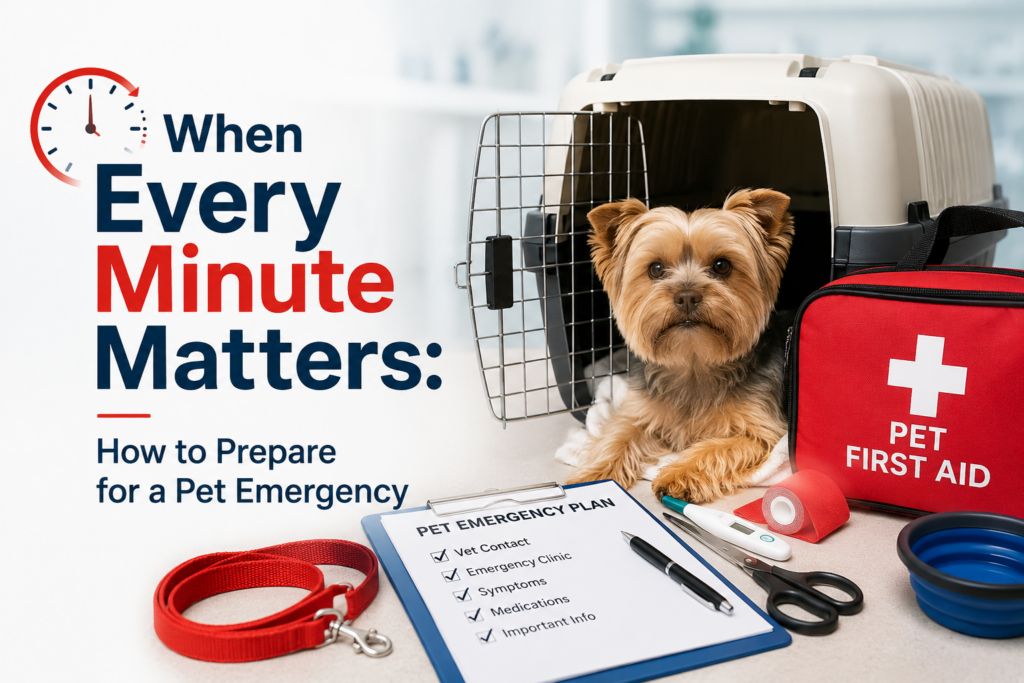
Your veterinarian will need important information about your pet. Make sure you know what medications your pet takes, the dosage and frequency, when medications were last given, and whether your pet has experienced sensitivities to medications or treatments.
It is also helpful to have vaccination records and a brief history of major illnesses, surgeries, and ongoing medical conditions readily available. Much of this information can be stored as notes or photographs on your smartphone.
Be Financially Prepared
Emergency treatment can be expensive, and many veterinary ERs require payment or a deposit before diagnostics and treatment begin. Having a financial plan in advance can give you more options during an already stressful situation.
Pet insurance, a dedicated emergency savings fund, and available veterinary financing options are among the resources pet owners may consider.
Know Some of the Warning Signs
Certain symptoms deserve immediate attention. These can include difficulty breathing, seizures, unresponsiveness, toxin ingestion, significant trauma, severe bleeding, repeated vomiting, paralysis, choking, bloating, pale gums, or difficulty urinating.
If you are unsure whether your pet’s condition is an emergency, calling a veterinary ER can be a helpful first step. A member of the clinic team may be able to help you determine whether immediate evaluation is appropriate.
Remember: ERs Prioritize the Most Critical Patients
When you arrive at a veterinary emergency hospital, you may have to wait. This does not necessarily mean your pet has been overlooked. Emergency teams prioritize patients according to the severity of their conditions, meaning another animal may require immediate attention.
Being patient and allowing the veterinary team to focus on the most critical cases can help the entire ER function more effectively.
Communication Matters
Once your pet is evaluated, do not hesitate to ask questions. Understand what the veterinarian is concerned about, what testing is recommended, what treatment options are available, and what the expected prognosis may be.
If finances are a concern, communicate that early. Open communication allows the veterinary team to discuss workable treatment options and create a plan that takes your circumstances into consideration.
A Little Preparation Goes a Long Way
You cannot predict when an emergency will happen, but you can prepare for one.
Know your local ER. Keep your pet’s medical information organized. Have a financial plan. Learn the warning signs. And most importantly, remember that you are not alone when your pet needs emergency care.
Dr. Julie Damron’s Small Animal Pet ER Essentials: Your Guide to Navigating the Veterinary ER was created to help pet owners understand the emergency care process and feel more prepared when their companions need them most.
Because when an emergency happens, preparation can turn uncertainty into action and every moment matters.